
Titans Architecture by Google Research
TL;DR
Titans, an architecture from Google Research (Behrouz et al., 2024), gives a model a long-term neural memory that learns what to keep and what to forget at test time so it can handle very long contexts. I review how it works and why it matters for long text, time series, and AI agents.
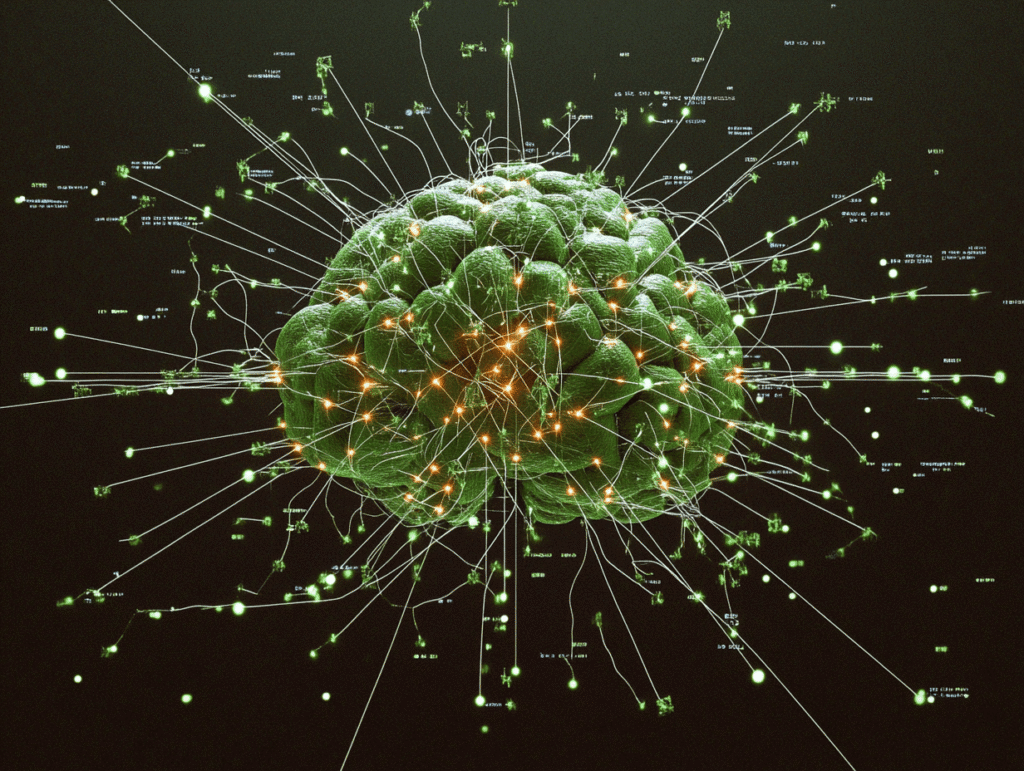
Titans Architecture Advances AI Efficiency for Long Contexts
Here I review a paper from Google’s research team, published in late December 2024, covering a promising new architecture called “Titans” designed to process a very wide context window.
The field of artificial intelligence (AI), as you already know, is constantly evolving to improve how machines learn and compute, most of which currently operate as Large Language Models (LLMs).
One of the hardest challenges lies in processing long data sequences, such as lengthy documents or complex time series.
Fair enough, yet what is a time series?
Picture a dataset collected over time, such as daily city temperatures, a stock price, or monthly unit sales of a product.
That chronologically ordered sequence of observations is called a time series.
Time-series analysis is critical for spotting patterns, trends, and seasonality, enabling sharper forecasts and better decisions.
That is the backdrop for the study titled “Titans: Learning to Memorize at Test Time,” which introduces an architecture aimed at changing how AI handles large volumes of sequential information.
In this context, “test time” means the phase when the AI model has already been trained and is running on new inputs, data it never saw during training.
The paper highlights the limits of traditional architectures like Transformers, which struggle with scalability and excessive memory consumption when processing long sequences.
The solution proposed by the researchers is a long-term neural memory module capable of learning, forgetting, and retrieving information efficiently.
Key highlights of the paper include:
- Long-Term Neural Memory: Inspired by human memory (the hippocampus), this structure learns to store relevant information by prioritizing “surprising” events that break established patterns.
- Forgetting Mechanism: The “Titans” architecture includes a forgetting mechanism that drops less relevant information to optimize memory usage, mirroring how human learning filters noise over time.
- “Titans” Variants: The study proposes three variants of the “Titans” architecture (MAC, MAG, and MAL) that integrate the neural memory module in different ways.
- Promising Results Across Domains: Benchmarks in language modeling, commonsense reasoning, DNA modeling, and time-series forecasting show “Titans” outperforming traditional models.
Let me briefly unpack those acronyms..
The study introduces three “Titans” variants, each integrating the long-term neural memory module differently:
- MAC (Memory as a Context): Memory acts as context alongside the current input, supplying relevant historical signals to guide processing;
- MAG (Memory as a Gate): Memory works as a gate, controlling the flow of information entering the main processing module;
- MAL (Memory as a Layer): Memory is stacked as an additional layer inside the neural network, processing information sequentially.
Each variant brings distinct performance and efficiency tradeoffs depending on the target task.
The practical implications of the “Titans” research for industry are broad.
- Natural Language Processing: Handling long documents more efficiently opens the door to smarter virtual assistants, stronger translation pipelines, and chatbots with better continuity and comprehension.
- Financial and Economic Data Analysis: More accurate forecasting on complex time series supports investment decisions, risk management, and market projections.
- Bioinformatics and Genomics: Modeling DNA sequences with the “Titans” architecture can speed up scientific discovery, aid new drug development, and improve diagnostic accuracy.
In short, the “Titans” study marks a meaningful step toward more capable and efficient AI models.
The ability to process massive volumes of data intelligently, learning and forgetting dynamically, promises to push AI forward across many domains, unlocking practical solutions and changing how people interact with technology.
Especially now, during the gradual rollout of AI agents.
You can read the full paper by clicking here.