
Pillar 02 · Search · Google Business Profile · AI Answers
Search and Authority
When people search for what you do, do they find you or your competitor?
Today people search on Google, Maps, and increasingly ask AI assistants. Across all three, whoever appears is whoever organized their site and signals to be understood. I help your business be found, understood, and recommended — and turn that visit into a real conversation.
One URL. Different journeys.
Human journey
-
Finds an answer
Search, YouTube, referral, internal navigation, or direct visit.
-
Requests a page
The GET request crosses CDN, cache, and access rules before hitting WordPress.
-
Reads and evaluates
HTML, content, proof, navigation, and offer support the decision.
-
Takes action
Opens WhatsApp, visits Work With Me, or submits a contact form.
A person can resume a session, compare options, and initiate contact.
Machine journey
-
Finds or receives a URL
Index, search, citation, or direct prompt from someone familiar with the brand.
-
Fetches the resource
The GET goes through the same network, cache, and policy layers.
-
Extracts a representation
HTML, structured data, or explicitly published Markdown.
-
Uses or cites the information
May summarize, cite, or point to the offer and contact; this alone does not prove conversion.
Crawlers and fetchers read and index. A browser-enabled agent may act only when a user authorizes it.

When Customers Search and End Up With Your Competitor
Search and Authority makes sense when a company exists, delivers great service, yet people searching for what it does never reach it.
Your competitor shows up first.
You search for your own service in your city, and the first listing belongs to another business. Often it is not even better than yours.
Your Google profile is neglected.
Outdated hours, five-year-old photos, unanswered reviews. Your Google Business Profile is your local search storefront, and right now it looks closed.
AI does not know you exist.
Someone asks ChatGPT or Gemini who solves that problem in your region, and the answer cites other names.
End-to-end architecture
Six layers. One connected system.
Open any layer to see what I evaluate, what I organize, and which artifacts the engagement can produce.
Discovery How visitors find you
System entry
The journey starts before the page.
People and machines can arrive via search, browsing, citations, or direct recall. Each source carries a different intent.
- Organic search
- Index and sitemap
- Internal links
- Citations
- Direct access
What I evaluate
Indexation, information architecture, search intent research, topic coverage, entry pages, and internal link distribution.
What I organize
Topics, queries, entities, pages, and navigation paths to close content gaps and eliminate cannibalization.
Possible deliverables Discovery map, content architecture, internal linking plan, and indexation priorities.
Before any internal link comes your editorial line: the filter that decides what enters the site and how each piece of content connects. Learn how to structure yours in Editorial Line: What It Is and How to Build Yours in Practice (in Portuguese).
HTTP Delivery How the resource reaches the visitor
Network, edge, and origin
Before the content, there is a response.
Every URL passes through DNS resolution, TLS connection, CDN, cache, and security rules before reaching the application that renders the page.
- DNS and TLS
- Cloudflare CDN
- WAF and bots
- Cache
- WordPress
What I evaluate
HTTP status codes, redirects, headers, caching, response time, uptime, and signals used to classify automated clients.
What I organize
The CDN → origin → application path, each layer's responsibilities, and technical fixes that affect crawlability and performance.
Possible deliverables Request path map, HTTP response and header audit, caching policy, and technical priorities.
Representation What each visitor can read
Technical SEO and content
The page has to state what it is.
HTML remains canonical. Metadata, semantics, and internal relationships help systems interpret the page, while OKF provides a complementary Markdown representation.
- Title and description
- Semantic HTML
- Canonical
- Internal links
- OKF Markdown
What I evaluate
Titles, meta descriptions, headings, main content, canonicals, images, contextual navigation, and consistency across representations.
What I organize
A structure that reads cleanly for people, search engines, and systems that choose to consume the Markdown corpus.
Possible deliverables On-page map, semantic specification, canonical fixes, and structured content bundle.
A real before-and-after inventory of titles, descriptions, and noindex rules appears in the SEO/GEO live diagnostic log for our own site (in Portuguese).
Entities and Authority Who offers, knows, and proves it
GEO and trust
Authority requires verifiable relationships.
Structured data helps declare entities and relationships. Content, authorship, references, and public consistency support interpretation; markup alone never creates reputation.
- JSON-LD
- Schema.org
- Entities
- sameAs
- E-E-A-T evidence
What I evaluate
Organization, Person, Service, Article, and BreadcrumbList where applicable, plus authorship, references, external profiles, and consistency across names and properties.
What I organize
The entity graph declared by your site and the public evidence linking person, company, services, and published content.
Possible deliverables Entity map, Schema.org architecture, validated JSON-LD, and an authority evidence plan.
Action From interest to the next step
Offer and conversion
Discovery only creates value when it guides a decision.
The page has to connect search intent, proof, and offer to a clear next step. Machines can reference your contact channels; crawlers do not start conversations.
- Offer
- CTA
- Work With Me
- Forms
What I evaluate
Offer clarity, conversion architecture, CTA context, form friction, and continuity between the page and customer outreach.
What I organize
Human pathways to engagement and clear signals a machine can locate and cite without fabricating a session that does not exist.
Possible deliverables Conversion map, CTA hierarchy, form improvements, and action-event specifications.
Measurement Evidence for the next decision
System learning
Each data source answers a different question.
Search Console shows search exposure; Analytics logs instrumented events; Cloudflare observes edge requests. Reading them together guides the next fix.
- Search Console
- Analytics
- Cloudflare
- Events
- Attribution
What I evaluate
Existing events, source parameters, data coverage, attribution limits, and differences between human visits and automated requests.
What I organize
A measurement plan that separates observation, inference, and conversion so you decide without mistaking impressions for business leads.
Possible deliverables Event plan, naming standards, reporting views, and a review routine by source and outcome.
Governance runs across the system
robots.txt, X-Robots-Tag, llms.txt, Web Application Firewall (WAF) rules, and caching declare or control different types of access. They are policies and signals; they do not replace strong content, they do not all act as hard blocks, and they do not guarantee third-party usage.
Clarity to decide. Scope to execute.
The method turns the layers above into priorities, owners, and verifiable evidence suited to your company's current stage.
Understand
Diagnostic
I listen to your context and locate where discovery, technology, meaning, or conversion is losing clarity.
Result: map of issues and priorities.
Define
Success criteria
We name the events and signals that represent real business progress, accounting for the limits of each data source.
Result: criteria and measurement plan.
Prioritize
Action plan
I connect pages, content, infrastructure, entities, and events in a feasible sequence with explicit dependencies.
Result: plan with scope and owners.
Evolve
Execution and review
We execute or guide your team, depending on the engagement format, and use evidence to steer the next correction.
Result: scope validation and next steps.
Scope and deliverables
The diagnostic defines the exact scope. Depending on the issue and engagement format, the work may combine the following artifacts:
- Discovery, indexation, and internal linking architecture
- Audit of the HTTP path, CDN, caching, status codes, and headers
- On-page map of metadata, semantics, canonicals, and content
- Entity map and JSON-LD architecture with Schema.org
- HTML representation, OKF bundle, and crawler governance
- Event plan and unified reading of Analytics, Search Console, and Cloudflare
Who leads this
Meet who leads this solution
Felipe Ferreira
I am an electrical engineer. I spent over 10 years in industry, where process, cost, and metrics are not matters of opinion. For about 6 years I have brought that same discipline to digital marketing and SEO.
That adds up to more than 26 market segments and 40 to 45 consulting engagements. I have worked with clients in Brazil, Portugal, the United States, the United Kingdom, and Australia. I have used English for over 10 years, and every engagement is human, directly with me, in Portuguese or fluent English.
I am the author of a book on lead generation and online customer acquisition, with a registered ISBN.
In the end, the question is always the same: does the math work?
Here I make sure that when someone searches for what you do, on Google or in an AI system, the answer is you.
Meet the specialist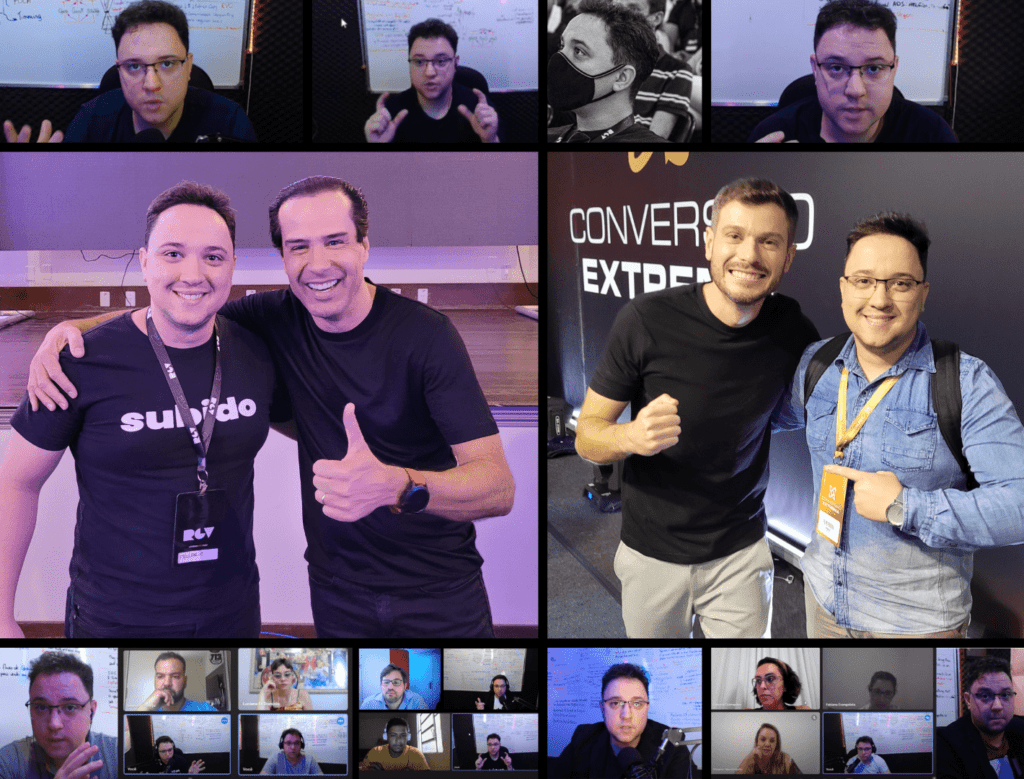
The format matches your current stage.
A focused question, a strategic decision, or a defined scope to ship.
Targeted need
Technical hour
BRL 350 BRL 250
To resolve a specific question and clarify the next step.
Understand the scenario
Diagnostics
Direction
Process, timing, and core challenge. Defines scope before committing to a project.
Plan and oversee
Consulting
Strategy & judgment
Planning, standards, and ongoing oversight for decisions and execution.
Put into practice
Implementation
Hands-on delivery
Defined-scope delivery with verifiable milestones.
Technical application
Documentation for this pillar
AI Citation Score of felipecferreira.com.br
How I test whether AI assistants cite my own website: the 6 fixed prompts of list 1, the 5 assistants, the round protocol, the scoring rule, and the timeline of rounds.
- Code
- MET-BA-GEO8CIT-001
- Version
- 1.0.0
- Scheduled review
- April 21, 2027
GEO Readiness Score of felipecferreira.com.br
Public result of my own website's GEO readiness score, measured by the 8-Layer GEO Inspection Method, with coverage, dates, layer scores, findings, and the timeline of all measurements.
- Code
- MET-BA-GEO8PRONT-001
- Version
- 1.0.0
- Scheduled review
- April 21, 2027
How the GEO Inspection Method Score Is Assigned
A 0 to 100 score computed by a fixed, public rule from the measured criteria of the GEO Inspection Method, always with coverage, measurement date, and method version.
- Code
- MET-BA-GEO8NOTA-001
- Version
- 1.1.0
- Scheduled review
- April 17, 2027
8-Layer GEO Inspection Method
Auditable method that verifies, from the server to AI citation, whether a website is received, understood, indexed, and recommended by search engines, assistants, and AI agents.
- Code
- MET-BA-GEO8-001
- Version
- 3.2.1
- Scheduled review
- April 17, 2027
SOP: JSON-LD Implementation and Validation
Procedure for planning, implementing, validating, publishing, and operating JSON-LD with acceptance criteria, validation evidence, and rollback.
- Code
- POP-BA-JSONLD-001
- Version
- 1.0.0
- Scheduled review
- February 2, 2027
Frequently asked questions
Why does my competitor show up before me on Google?
It is almost never luck. Usually it comes down to a more complete Business Profile, more answered reviews, pages that directly answer what the buyer searched, and a site Google can crawl without stumbling. The diagnostic shows which factor carries the most weight in your case.
Is it worth maintaining a Google Business Profile if I already have a website?
Yes, very much so. In local search, the profile appears above organic website links, and prospects often call or message on WhatsApp right from the listing without ever opening your site.
Can my business appear in ChatGPT or Gemini answers?
You can meaningfully improve the odds, though no one can guarantee it. Structured data, content that answers real buyer questions, and authority signals off-site help AI systems understand who you are, as explained in why having a website matters in the AI era (in Portuguese). No format forces a model to cite a brand, and I never promise that.
How long does SEO take to bring in clients?
It depends on your starting point. Google Business Profile and technical foundation fixes tend to show up sooner. Content and authority take longer. During the diagnostic, I agree with you on which signal we will track and when, and that signal is real inquiries, not just clicks.
Does a good-looking Search Console chart mean it is working?
Not necessarily. Pretty impressions and clicks do not make the math work if nobody books a call or reaches out on WhatsApp. I measure organic search by the business action that actually counts.
Do JSON-LD, Schema.org, and OKF guarantee presence in AI answers?
No. They help declare structure, entities, and machine-readable representations, yet no format forces search engines or AI models to index, cite, or recommend a brand. Authority also depends on content quality, consistency, and external evidence.
What is the difference between technical hour, diagnostic, consulting, and implementation?
A technical hour resolves a specific question in up to one hour. A diagnostic listens to your scenario and sets priorities without turning into a full project. Consulting delivers the plan and guides your team through execution. Implementation is hands-on service delivery: we execute the agreed scope.
Do you work with companies outside Brazil?
Yes. I have worked with clients in Portugal, the United States, the United Kingdom, and Australia. I have used English for over 10 years, and every engagement can be conducted in fluent English or Portuguese. And communication is always human: the person talking to you is me.